


As the original pioneers of natural astaxanthin, AstaReal AB’s story began in the 1980s at Uppsala University in Sweden, where a research group was exploring the untapped potential of microalgae. What started as a scientific curiosity grew into a groundbreaking discovery that would go on to change the landscape of antioxidants and supplements.
“From the very start, we focused on exploring the algae’s potential applications across various industries. In collaboration with industrial actors, we were then able to bridge the gap between academic research and practical solutions,” says Kurt Haglund, AstaReal AB Head of Quality and a member of the original research team at Uppsala University.
During the late 1980s, the research group focused on identifying a species of algae that could produce high-quality astaxanthin. It required a number of different experiments and trials. The group worked together with industry leaders in the fish farming industry and realized astaxanthin’s potential as a feed additive to enhance health and coloration of fish. This eventually led to the discovery of the optimal algae species and the establishment of pilot-scale production.
From pilot trials to commercial success
The company that is today known as AstaReal AB was founded in 1988. In the beginning, the company focused on producing astaxanthin for aquaculture, but the vision soon expanded. By the mid-1990s, the focus had shifted to creating a high-purity product for human consumption, which required innovative production methods and strict quality standards.
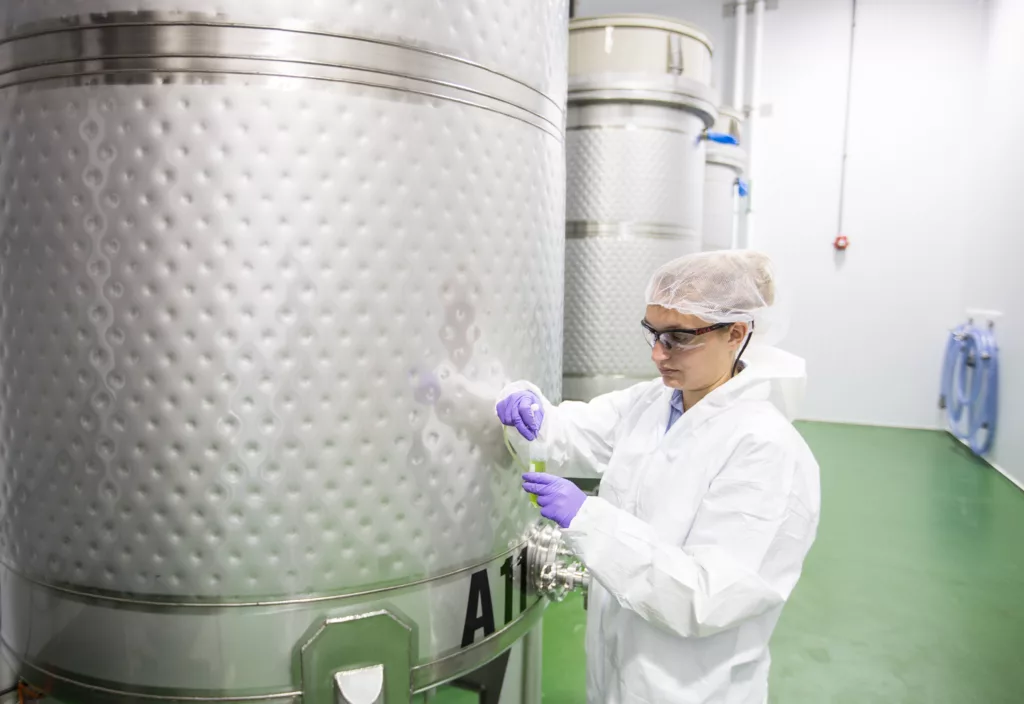
The company established its first production facility in 1994 in Gustavsberg, Sweden. The site was chosen for its proximity to cooling water, which was necessary for managing the heat generated during production. The facility in Gustavsberg remains operational to this day.
“We started small, renting facilities and testing the limits of what we could achieve. By 1995, we had laid the groundwork for a sustainable and high-quality production process, and that’s when we launched Astaxin – the first nutritional supplement for humans containing a natural source of astaxanthin,” says Haglund.
Soon after the launch, AstaReal AB began delivering astaxanthin to contract manufacturers and brand owners in both human and animal health around the world.
AstaReal AB’s global journey
In 2003, AstaReal AB was acquired by Japanese pharmaceutical company Fuji Chemical Industries, which also established additional AstaReal AB sister companies in the US, Singapore, and Japan – turning AstaReal AB into part of a global company group. In 2006, AstaReal AB expanded the production capacity in Gustavsberg, Sweden, and in 2010, AstaReal USA obtained the FDA-recognized GRAS (Generally Recognized As Safe) status in the U.S. verifying the safety of AstaReal’s astaxanthin as a food ingredient.
From 2014 to 2016, Fuji Chemical Industries opened a production facility in Washington State, as well as sales offices in Singapore, India and Australia, to meet the growing demand. This also solidified the company group’s position as a global leader in natural astaxanthin production.
Since the launch of the first astaxanthin supplement in 1995, AstaReal AB has continued developing new astaxanthin products. In 2022, the company presented its latest product – AstaGummy Boost, natural astaxanthin in chewable gummy form.
In 2024, AstaReal AB took its first step into the consumer market when the company brought the distribution of its own product, Astaxin, back in-house. The next step came a year later when AstaReal AB expanded its portfolio with another two brands – garlic supplement Kyolic, and innovative swallowing aid Medcoat.
In three years, AstaReal AB celebrates 40 years of research and innovation in natural astaxanthin. By continuing to invest in research and development, the company’s aim is to explore new applications that can improve global health and well-being.
“I’ve always believed in the potential of this product. It’s exciting to see how far we’ve come – and where we’re headed next,” says Kurt Haglund, Head of Quality at AstaReal AB and a member of the original research team at Uppsala University.